



A world-first flow-focusing technology for monofilament microfibers
 |
|
Creating Novel Functional Microfibers at Ambient Conditions
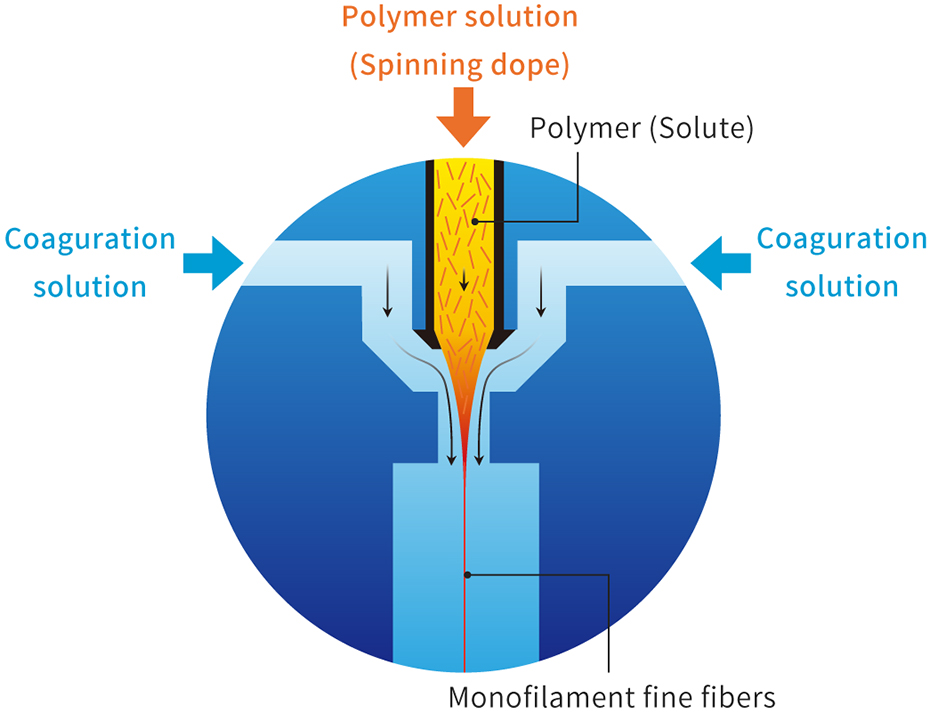
Highly engineered and precision-machined microspaces generate a stable fine jet, reducing the fluid diameter by up to three orders of magnitude. This enables the continuous production of fibers that are far finer and more highly oriented than those obtained by conventional wet spinning.
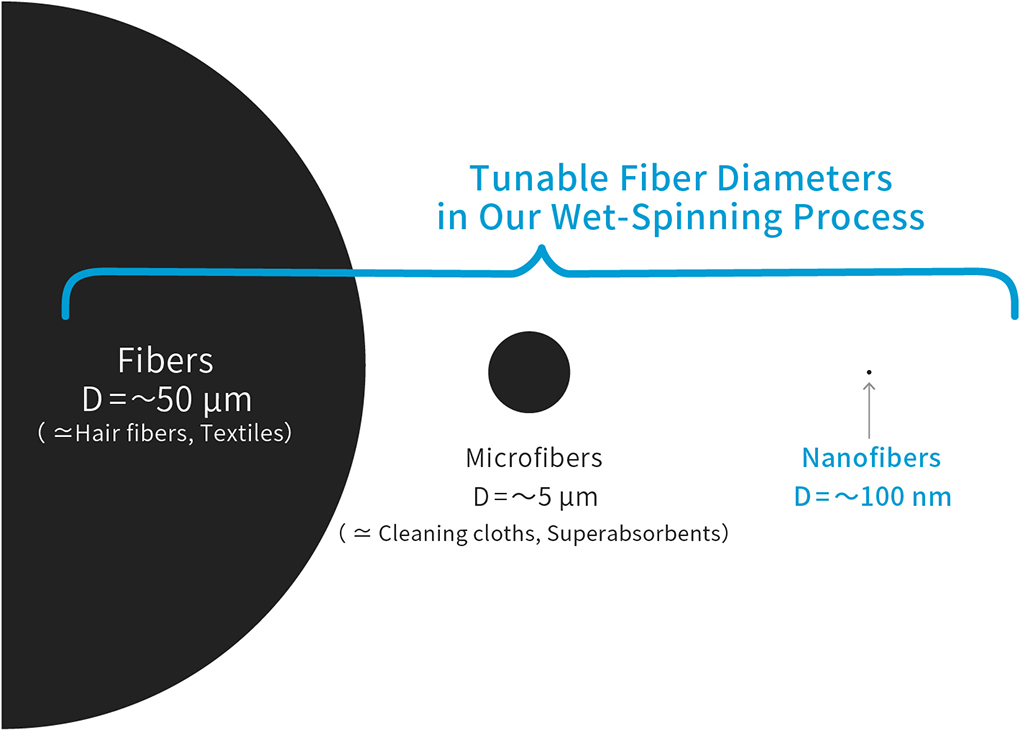
Current Fiber Materials and Production Processes
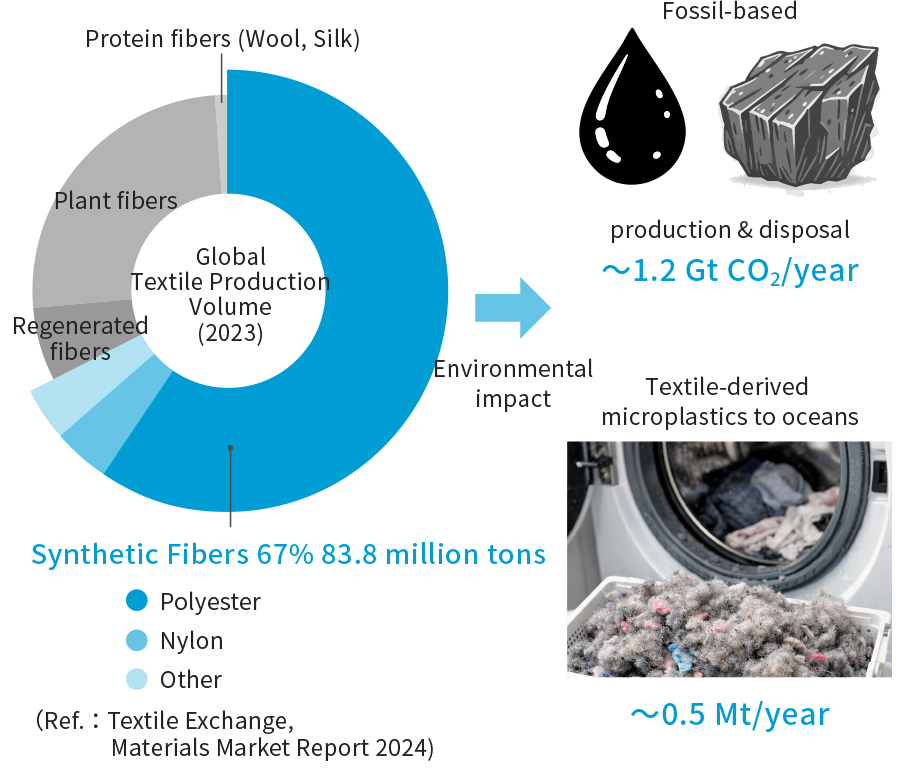
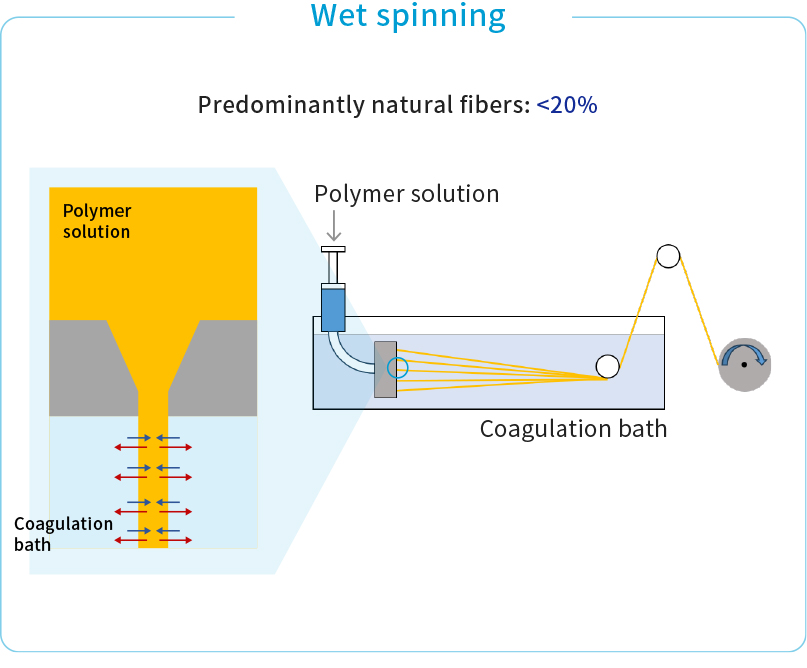
Only wet-spinning can process heat-sensitive sustainable materials
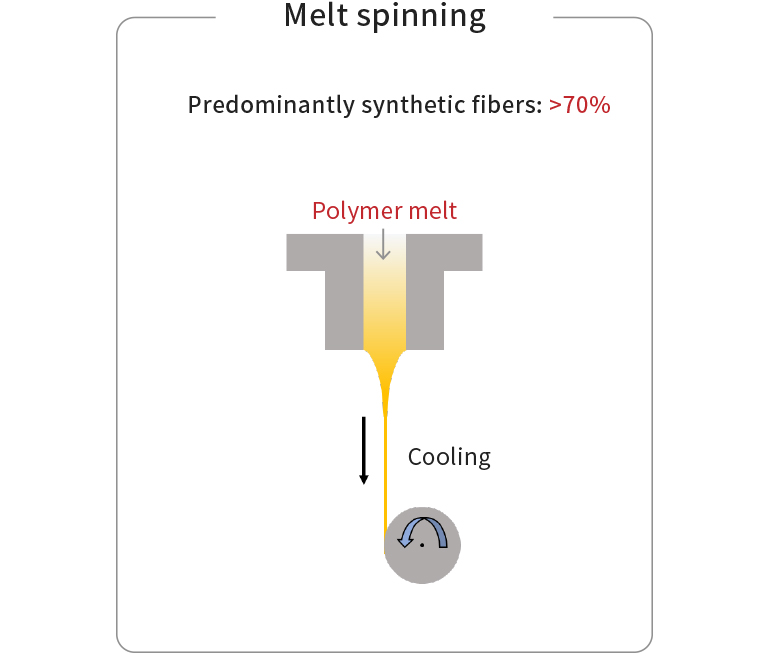
With the rise of synthetic fibers, melt spinning, which applies heat to polymer raw materials, has become the mainstream method.
However, due to the depletion of fossil fuels and increasing environmental concerns, a transition toward sustainable alternatives is accelerating.
Since many sustainable raw materials are highly sensitive to heat, a shift back to wet spinning technologies is anticipated.
 |
 |
A platform that spins functional ultrafine fibers
|
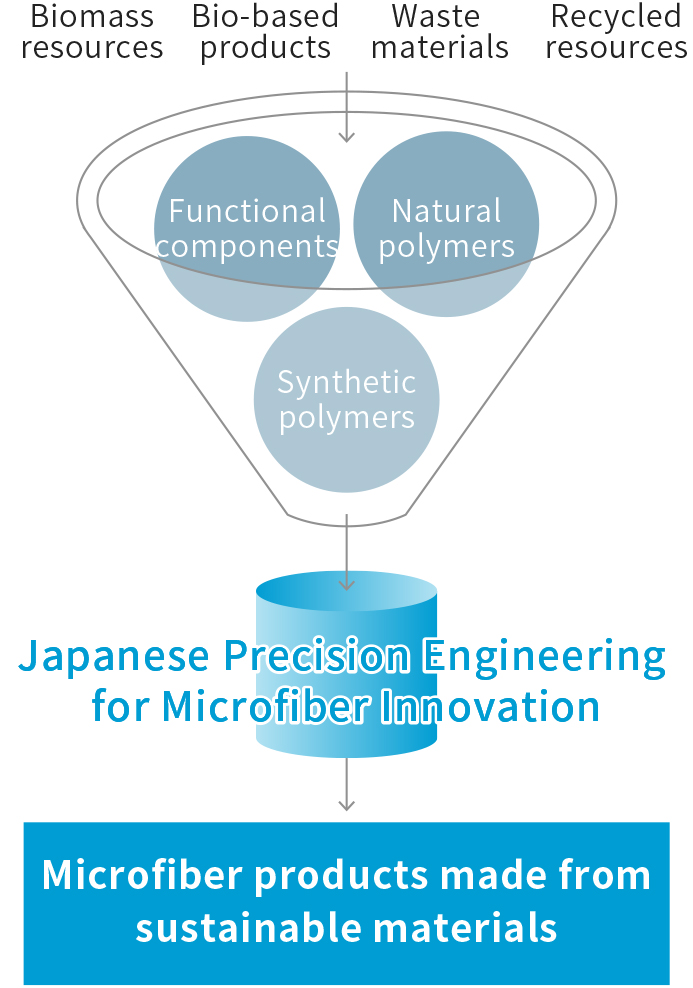
Microchannel wet-spinning technology can be applied to a wide variety of raw materials, not only purely biomass-derived polymers, but also active components recovered from waste, proteins, and proprietary high-performance polymers developed by various companies. 目的高分子を含むドープ調製【時代の潮流】 細く強い糸にする紡糸技術【弊社の強み】 |
 |

High conductivity achieved through enhanced molecular orientation
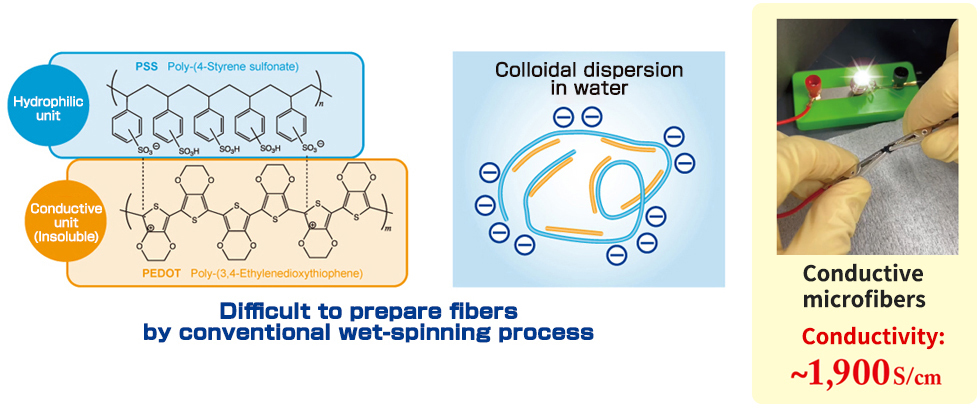
Conductive fibers serve as a representative example of performance improvement enabled by high orientation.
Using our microchannel wet-spinning technology, we have confirmed a significant increase in molecular alignment within the produced fibers.
In fibers made from PEDOT:PSS—the conductive polymer used as the raw material—this high degree of orientation has contributed to enhanced electrical performance, achieving an electrical conductivity of approximately 1,900 S/cm.
Expanding the potential of conductive fibers
With the rapid advancement and widespread adoption of smartphones and electric vehicles, electromagnetic interference (EMI) countermeasures—such as electromagnetic shielding materials—have become increasingly important.
As semiconductor technologies continue to evolve at a remarkable pace, the materials that support them are required to reach even higher performance levels.
We are developing next-generation fibers with enhanced intrinsic functionalities to meet these growing demands.





Transforming animal-derived resources into next-generation materials
Using our technology, we can convert heat-sensitive animal resources?such as underutilized biological components and food-industry residues?into ultrafine fibers that were previously difficult to fabricate with conventional spinning methods.
As one example, we have succeeded in producing collagen fibers approximately 30 μm in diameter, exhibiting tensile strength surpassing silk while retaining excellent biocompatibility.
These fibers also demonstrate strong cell affinity, making them highly promising for medical applications such as cell scaffolds and surgical sutures.

Strength of Small-Lot, On-Demand Production
Traditionally, the fiber industry has focused primarily on apparel and construction materials, leading many manufacturers to prioritize increasing production volume. While scaling up production has successfully reduced manufacturing costs, it also creates challenges: new or difficult-to-handle materials often cannot be easily tested, due to limitations such as feedtank capacity and the complexity of switching production lines.
Our technology enables fiber fabrication with a highly compact system, requiring less than 100 mL of raw materials for trial production. This allows rapid evaluation and development of novel materials.
Through on-demand manufacturing, we can also handle rare materials available only in limited quantities and active ingredients whose performance changes over time, providing customized high-value solutions.
Creating New Markets Across Industries
 By converting sustainable raw materials into fibers, we are opening up new application fields beyond traditional areas such as apparel and construction materials.
This includes industries where fiber-based development has been limited?medical materials, cosmetics, healthcare, and food technologies (e.g., cultured meat).
In addition to developing new materials in-house, we aim to pioneer new markets together with partners from diverse sectors through contract-based PoC studies and collaborative R&D initiatives.